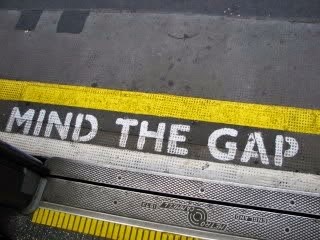
End of the semester harks the end of the silence of Randomness.
From under the pile of term papers and final exams, out crawls La Professora to see a world that has gone on with its crazy randomness without her.
Case in point: some anti-abortion fundamentalist Christian shot a doctor at his church. For the most part, the leadership of the various anti-abortion groups have been condemning, albeit faintly, the shooting. Perhaps because of where it occurred. One, a preacher and director of Operation Save America, is reported to have said Dr George Tiller "has shed the blood of countless thousands, tens of thousands, hundreds of thousands of little baby boys and girls and burned them up in his on-premises incinerator. Now this thing has come home to him."
Don't get me wrong, I'm not a fan of late term abortions. However, there is something fundamentally wrong about a group of people who believe that it is reprehensible for a doctor to abort a fetus, but it is morally commendable to kill that doctor for doing so. The mind boggles.
There is hope, however. In another part of the world, the Grand Mufti of Egypt, Ali Gomaa, issued a fatwa 'banning' weapons of mass destruction. Seems that WMDs are likely to kill Muslims as indiscriminately as non-Muslims. Not that his ruling will influence the clerics and politicians of Iran.
Speaking of Iran and having things come home, it appears that the nation known for being a supporter of terrorist activities elsewhere in the Middle East is now reaping its own whirlwind of distruction. On May 28, a bomb exploded at a mosque near the eastern portion of that country, where it borders with Afghanistan and Pakistan, killing 25. Of course, Iranian officials claimed that the bombers were American and Israeli, with ties to al-Qaeda. The following day, gunmen attacked the campaign headquarters of the incumbent presidential candidate. Today, a bomb was discovered in the toilet of a domestic airplane. The attacks are believed to be the work of the Jundullah (Allah's Soldiers), a Sunni separatist group. While the links al-Qaeda may be overdone -- yet not inconceivable, there has been disagreement between the likes of the Taliban and the ayatollahs of Iran over the nature of a true Islamic State -- it would appear that there might be some truth to the link with America. Rumors abound that under the Bush administration, there was a $400 million fund for covert operations assisting the religious and ethnic minorities in Iran in their push to destabilize that country. It is, after all, part of the Axis of Evil.
Maybe being under that pile of student work wasn't so bad after all.
Grades are posted. Let the whining begin.
Sunday, May 31, 2009


Tuesday, January 27, 2009
In No Particular Order III
It's the time again, when students in my 100W course set and write in their blogs for all the world to see. Click on some and find out what's on the minds of the "average" Political Science student for Spring 2009:
Because Eye Was Told To
Barely Politics
PoliSci '09
Shadows on my Cave Wall
looking down at the world
Peace and Discontent
Wannabe Huntington.
Live, Learn, Love, and Bloom
Useful tibits, and raucous banter
You're out of touch, I'm out of time
Confessions of a CSPAN Addict
easily amused
WIJDON
kshiveley
Trev
MY View
The Weekly Thought
Curious Souls
My Thoughts
An Open Challenge to Grandma
My Thoughts (not the same as the previous)
The K Street
cruzn 4 a brusin
Because Eye Was Told To
Barely Politics
PoliSci '09
Shadows on my Cave Wall
looking down at the world
Peace and Discontent
Wannabe Huntington.
Live, Learn, Love, and Bloom
Useful tibits, and raucous banter
You're out of touch, I'm out of time
Confessions of a CSPAN Addict
easily amused
WIJDON
kshiveley
Trev
MY View
The Weekly Thought
Curious Souls
My Thoughts
An Open Challenge to Grandma
My Thoughts (not the same as the previous)
The K Street
cruzn 4 a brusin
Tuesday, January 06, 2009
Comparative Randomness
For the love of all that is random, stop with the presidential comparisons.
Ever since it was clear that Barack Obama would win the election this past November, the media has gone wild with the comparisons to previous holders of the office. No one seems to have noticed that the comparisons aren't all that great.

Yes, President Abraham Lincoln was a great American. He did what he could to hold the Union together. His face in on Mount Rushmore. He was even from the same mid-western state of Illinois.
But President Lincoln's term in office did not end well. He was shot by an unhappy Confederate supporter.
Not a good comparison to use, given the current hostile climate created by some members of the political right.

Then there's the comparison with President Franklin D. Roosevelt. Yes, the country is currently in the middle of the Great Recession, and, just as was done in the 1930s, the blame can be put on the previous administration's inability or unwillingness to act to reverse the tide of a crashing economy.
Again, that president's term in office did not end well. That time it was of natural causes, but one could say that the stress of trying to solve the world's problems can age a person to the point that those causes aren't really all that natural.
 The last comparison being made to the president-elect is that of President John F. Kennedy.
Yes, they both went to Harvard; yes, they were both relatively young when elected; and yes, both had the "enough" problem -- Kennedy was thought to be "not Catholic enough" -- among a whole slew of other comparisons.
And yet, JFK's presidency did not end well. His term in office ended on a cold day in Dallas.
No one seems to have noticed the awful thread that floats through all these comparisons: Presidents whose terms did not end with the election of someone else.
So, please world, stop making these comparisons, before someone takes them the wrong way.
Ever since it was clear that Barack Obama would win the election this past November, the media has gone wild with the comparisons to previous holders of the office. No one seems to have noticed that the comparisons aren't all that great.

Yes, President Abraham Lincoln was a great American. He did what he could to hold the Union together. His face in on Mount Rushmore. He was even from the same mid-western state of Illinois.
But President Lincoln's term in office did not end well. He was shot by an unhappy Confederate supporter.
Not a good comparison to use, given the current hostile climate created by some members of the political right.

Then there's the comparison with President Franklin D. Roosevelt. Yes, the country is currently in the middle of the Great Recession, and, just as was done in the 1930s, the blame can be put on the previous administration's inability or unwillingness to act to reverse the tide of a crashing economy.
Again, that president's term in office did not end well. That time it was of natural causes, but one could say that the stress of trying to solve the world's problems can age a person to the point that those causes aren't really all that natural.
 The last comparison being made to the president-elect is that of President John F. Kennedy.
Yes, they both went to Harvard; yes, they were both relatively young when elected; and yes, both had the "enough" problem -- Kennedy was thought to be "not Catholic enough" -- among a whole slew of other comparisons.
And yet, JFK's presidency did not end well. His term in office ended on a cold day in Dallas.
No one seems to have noticed the awful thread that floats through all these comparisons: Presidents whose terms did not end with the election of someone else.
So, please world, stop making these comparisons, before someone takes them the wrong way.
Image Credit:
Obama as Lincoln: http://bagnewsnotes.typepad.com/bagnews/2007/06/your_turn_betwe.html
FDR and Obama: http://www.beyondchron.org/articles/Leftist_Obama_Critics_Should_Study_FDR_6426.html
Kennedy and Obama: http://www.guardian.co.uk/commentisfree/2007/jul/25/obamathenextjfk
Obama as Lincoln: http://bagnewsnotes.typepad.com/bagnews/2007/06/your_turn_betwe.html
FDR and Obama: http://www.beyondchron.org/articles/Leftist_Obama_Critics_Should_Study_FDR_6426.html
Kennedy and Obama: http://www.guardian.co.uk/commentisfree/2007/jul/25/obamathenextjfk
Wednesday, September 24, 2008
Random Polling
The Washington Post and ABC News have declared a winner. Sorta.
The latest polling data gathered by these organizations show that Barak Obama is leading John McCain, 52% to 43%, and that nine percentage points is greater than the margin of error so we can believe that the Democratic candidate has the November election sewn up. Mostly.
Any political science student, especially those who have taken my methodolgy course, should know that national polls mean diddlely in an election that is decided by state totals. For those who must know, right now, how the campaign is shaping up, La Professora is making the following recommendations:
1. Get over it. If you're not registered to vote, you obviously don't care enough. If you are registered, get informed on the issues and the stances of the candidates and their parties. The Republicans and the Democrats have made their respective platforms available online. Being an informed voter is far more important than being informed as to what the nation "thinks". Better yet, try Smart Voter for help on figuring out the issues -- from the national to the local -- on which you will be expected to have an informed opinion before voting.
2. Check out the various websites that predict how individual states will cast their electoral college votes based on polls taken at the state levels, not the national level. The three that appear to be better at it are:
NPR
CNN
and
Pollster
Then there's the possibility that given the fact that there are 538 electoral college votes available, if the states split into blue and red such that there's a 269-269 tie, it will come down to Congress deciding in January 2009. That's a likelihood that at least one British reporter has explored.
If you want to see how likely that is, play with CNN's Electoral Map Calculator, using the data from the other three maps listed above.
In the end, as my romantic partner likes to point out, the only poll that matters is the one taken on the first Tuesday in November.
The latest polling data gathered by these organizations show that Barak Obama is leading John McCain, 52% to 43%, and that nine percentage points is greater than the margin of error so we can believe that the Democratic candidate has the November election sewn up. Mostly.
Any political science student, especially those who have taken my methodolgy course, should know that national polls mean diddlely in an election that is decided by state totals. For those who must know, right now, how the campaign is shaping up, La Professora is making the following recommendations:
1. Get over it. If you're not registered to vote, you obviously don't care enough. If you are registered, get informed on the issues and the stances of the candidates and their parties. The Republicans and the Democrats have made their respective platforms available online. Being an informed voter is far more important than being informed as to what the nation "thinks". Better yet, try Smart Voter for help on figuring out the issues -- from the national to the local -- on which you will be expected to have an informed opinion before voting.
2. Check out the various websites that predict how individual states will cast their electoral college votes based on polls taken at the state levels, not the national level. The three that appear to be better at it are:
NPR
CNN
and
Pollster
Then there's the possibility that given the fact that there are 538 electoral college votes available, if the states split into blue and red such that there's a 269-269 tie, it will come down to Congress deciding in January 2009. That's a likelihood that at least one British reporter has explored.
If you want to see how likely that is, play with CNN's Electoral Map Calculator, using the data from the other three maps listed above.
In the end, as my romantic partner likes to point out, the only poll that matters is the one taken on the first Tuesday in November.
Tuesday, September 16, 2008
Stimulating Randomness
My students know -- mostly because I freely admit -- that La Professora is a social liberal but a fiscal conservative. This makes choosing candidates during election time difficult. The choice isn't great: the social progressive who desires to end want and suffering by spreading money as quickly and widely as an STD at 60s love-in, or the financial tightwad who believes that the unwashed masses should pull themselves up by their bootstraps, disregarding the lack of boots, or shoes of any kind.
Added to this problem is the 2008 stimulus check plan and whether or not the government should do it again. The Republicans pushed hard for the first round, saying it would put a spark into the economy and save us all from recession. Now, it seems, it is the turn of the Democrats to take up the Money to the People mantra.
The national debt is nearly 10 trillion dollars. I can remember when folks complained that Reagan, the "small government" president, left the country with a $3 trillion hole. I'm not one to say that Democrats are all that good at pushing down the money we taypayers, vis-a-vis our government, owe, but the Bush administration hasn't been all that good at living up to the fiscally conservative ideal.
While a good portion of the debt comes from the political and military quagmire that is adding an estimated $7.1 billion per month to the American expenditures -- not counting the untold cost to the average American at the fuel pump due to the increase in gas costs caused by that same policy miscalculation -- a portion is due to the ill-thought out stimulus plan rolled out at the beginning of 2008. A plan that spent $41.8 million just to send out 130 million letters to let taxpayers know that, at a later date, the IRS would be sending them a check. Checks that totalled $168 billion. Keep in mind that the current budget deficit is $407 billion; the highest it has ever been.
The Democrats are so enthused by the "success" of that stimulus, they want to do it again -- before the election, but to keep it to a more modest $50 billion. To which I'd say, they must be stoned. The short-term effect of a stimulus package cannot overcome two key economic factors.
1. Unemployment is at 6.1 percent, the highest it has been since 2003 -- a $100 check isn't going to do it for those without a job.
2. The investment banking industry is on the verge of a total collapse, which will drive even the most spendthriftiest person to think twice about wantonly spending money -- even "free" money.
But, one might say, the stimulus plan worked -- people cashed their checks and bought goods, which will jump-start the economy. Not so, says a recent survey by Harris Interactive. Of those who received checks, 41% used the money to pay down household debt -- mostly credit card bills -- and 31% said that they socked the money away in a savings account or investments, that makes for a total of 72%. Only one in five (a little over 20%) Americans said that they had used the money the way the government had hoped.
This is a clear case of catering to the electorate: you're feeling the pinch, so let's spread some STD -- Stimulus, Thanks Democrats -- in your direction in hopes that this time, you'll spend it on some Chinese-made products at WalMart and feel good about the Democratic party which made it possible.
Makes one wonder if condoms come in political sizes -- what they got, I don't want to catch.
Added to this problem is the 2008 stimulus check plan and whether or not the government should do it again. The Republicans pushed hard for the first round, saying it would put a spark into the economy and save us all from recession. Now, it seems, it is the turn of the Democrats to take up the Money to the People mantra.
The national debt is nearly 10 trillion dollars. I can remember when folks complained that Reagan, the "small government" president, left the country with a $3 trillion hole. I'm not one to say that Democrats are all that good at pushing down the money we taypayers, vis-a-vis our government, owe, but the Bush administration hasn't been all that good at living up to the fiscally conservative ideal.
While a good portion of the debt comes from the political and military quagmire that is adding an estimated $7.1 billion per month to the American expenditures -- not counting the untold cost to the average American at the fuel pump due to the increase in gas costs caused by that same policy miscalculation -- a portion is due to the ill-thought out stimulus plan rolled out at the beginning of 2008. A plan that spent $41.8 million just to send out 130 million letters to let taxpayers know that, at a later date, the IRS would be sending them a check. Checks that totalled $168 billion. Keep in mind that the current budget deficit is $407 billion; the highest it has ever been.
The Democrats are so enthused by the "success" of that stimulus, they want to do it again -- before the election, but to keep it to a more modest $50 billion. To which I'd say, they must be stoned. The short-term effect of a stimulus package cannot overcome two key economic factors.
1. Unemployment is at 6.1 percent, the highest it has been since 2003 -- a $100 check isn't going to do it for those without a job.
2. The investment banking industry is on the verge of a total collapse, which will drive even the most spendthriftiest person to think twice about wantonly spending money -- even "free" money.
But, one might say, the stimulus plan worked -- people cashed their checks and bought goods, which will jump-start the economy. Not so, says a recent survey by Harris Interactive. Of those who received checks, 41% used the money to pay down household debt -- mostly credit card bills -- and 31% said that they socked the money away in a savings account or investments, that makes for a total of 72%. Only one in five (a little over 20%) Americans said that they had used the money the way the government had hoped.
This is a clear case of catering to the electorate: you're feeling the pinch, so let's spread some STD -- Stimulus, Thanks Democrats -- in your direction in hopes that this time, you'll spend it on some Chinese-made products at WalMart and feel good about the Democratic party which made it possible.
Makes one wonder if condoms come in political sizes -- what they got, I don't want to catch.
Saturday, July 05, 2008
Burning Randomness
I have two "hometowns". One of them is dealing with a wild fire at the moment. As the governor has designated the blaze there a priority fire and thus sent to the area all available fire fighters and bombers, I thought I'd dedicate this blog entry to the fierce folks who gave up their holiday weekend to fight the good fight far from their own homes so that the folks in my hometown can be safe. I'm sure you'll be impressed with their skills as I am.


The burn map as of July 5th.

Photo Credits:
http://www.latimes.com/news/local/la-me-goletafire-pg,0,4363411.photogallery?1
http://www.independent.com/photos/galleries/sets/gap-fire/
http://www.noozhawk.com/local_news/article/0704_report_from_the_front_lines_day_ii
http://www.independent.com/news/2008/jul/05/gap-fire-reaches-critical-stage/
http://www.latimes.com/news/local/la-me-goletafire-pg,0,4363411.photogallery?1
http://www.independent.com/photos/galleries/sets/gap-fire/
http://www.noozhawk.com/local_news/article/0704_report_from_the_front_lines_day_ii
http://www.independent.com/news/2008/jul/05/gap-fire-reaches-critical-stage/
Tuesday, July 01, 2008
Liquid Randomness, Just Add Water
From the land of that Arch-Environmentalist, Al Gore, comes the $480 bottle of water.
I kid you not -- the Washington Post reported that a company called "BlingH2O" in Tennessee is selling a special edition of its water, which normally sells for the already outrageous price of $40 per wine bottle size, for 12 times as much.
When you consider the price of water coming out of the tap, that exorbitant cost for this bottled water, which I remind you comes from Tennessee -- not Fiji, not the Alps, not some glacier in Antarctica -- seems both ridiculous and sad: ridiculous that someone would even consider paying that much for a bottle of "special edition" water; sad for the same reason.
Now, before you insist that bottled water is better than tap, and thus worth the extra cost, there are a few things to consider.
First is that, for all that people say that they can taste the difference between tap and bottled, blind tasted tests have demonstrated that people can't tell the difference between the two, for all the campaigning that bottled water has a better "mouth feel". An acquaintance of mine runs a tasting room at a winery down in Santa Ynez valley; he once told me that the easiest way to get rid of a poor selling wine is to not put it on sale, but to tell folks in glowing terms that the wine has a unique taste that can't be found in other wines. The various bottled water companies have figured this out: you can have a unique water with a taste that can't be found anywhere else. Which leads me to wonder if water actually has a taste.
Second, there is no government regulation of bottled water. There is, however, several strict regulations on what may come out of the tap in your home. What this means is that you can be sure that the quality of the water coming out of the tap is high enough. High enough, in fact, that bottled water companies such as Aquafina and Dasani are bottling local tap water and selling it for 1,000 times more than the cost of the original tap water. But, you say, the companies are putting the water through more purification and that makes the water better. All those companies are doing is purifying already rather pure enough water. That is, if they are purifying it. The Natural Resources Defense Council reported that while 25% of the bottled water available in this country is basically tap water, a good portion of the time it's not even given further purification.

Third, consider the cost of the bottle. Bottles are made of plastic. Plastic is made from a petrochemical. Petrochemicals are made from petroleum, commonly known as oil. Given that oil is currently selling at about $140 per barrel, and that the supply is rapidly decreasing, if you'd like the price of gas that goes into your car to go down, you need to cut down on the demand for other products which are generated out of petroleum. Worldwide, some 2.7 tons of plastic goes into making those bottles. "Making bottles to meet Americans' demand for bottled water requires more than 1.5 million barrels of oil annually, enough to fuel some 100,000 U.S. cars for a year," said the spokes person for the Earth Policy Institute.
Then there's the cost of transporting the bottle from there to here. Consider Fiji water: indeed that water is not tap water per se, but there is the environmental cost of producing the bottles and shipping them to "thirsty" Americans thousands of miles away. As of the first of the year, the company has gone "carbon-negative", which means that the company is purchasing environmental offsets. Good for them; still bad for the world -- most of those bottles will end up in landfills.
Fourth, with all the complaining about the cost of gas these days, you'd think people would question the cost of water. Figure an average cost of $2.50 per litre -- more if you're buying the "fancy" stuff -- and that runs roughly $10 per gallon. I don't think I need to write more on that subject.
Fifth, water is a human rights issue, but Americans will only defend the right to waste their money on what is nearly free to them. In many parts of the world, demand for that most basic of human rights -- the right to drinkable water -- is outpacing supply. Currently, over a billion people are living without access to safe water. It is believed that, if current trends continue, by 2025, two out of every three people on the planet will be forced to live on less than 14 gallons of water a day. That's the total for bathing, cooking, cleaning, and drinking. As a comparison, the average American uses 96 gallons a day. Yet, the Earth Policy Institute reports that some 41 billion gallons of water are sold annually in bottles. Of that number, American consumers account for 7 billion gallons, making it the world's biggest consumer of bottled water as it chugs downs 17% of the global market.
Granted, our culture's views on "healthy" water is not new. Back in the days before germs were understood, most northern Europeans viewed bathing as unhealthy. Most people drank wine or beer because water was a disease vector. Today, marketers are telling us that bottled water from glaciers and from some volcanic well on Hawaii are super pure because those waters have been "untouched" by humans. That doesn't make the waters better. If anything, I'd really be concerned about the glacier and iceberg waters -- while the ice may be untouched by humans, that's not to say that it was untouched by anything living. I really don't want to know if the Charmin bears took a pit stop on that glacier.
In Britain, some of the bottled "mineral" waters have so much mineral content added that they are unhealthy for babies and children. Lead's a mineral, right?
Mostly, I'm worried about how much intelligence Americans have. There's a company in Hawaii that is selling desalinated seawater as "concentrated water" for $33.50 per 2 ounce bottle. That makes the product worse than the $480 bottle of water in that not only is it more expensive, ounce for ounce, but in order to get the "full enjoyment" of the water, you must add water to the water.
I don't think it can get any sillier, but I equally sure that with the right marketing campaign, Americans can be made to buy anything.
We're not being sold the Brooklyn Bridge, we're buying the water under it.
I kid you not -- the Washington Post reported that a company called "BlingH2O" in Tennessee is selling a special edition of its water, which normally sells for the already outrageous price of $40 per wine bottle size, for 12 times as much.
When you consider the price of water coming out of the tap, that exorbitant cost for this bottled water, which I remind you comes from Tennessee -- not Fiji, not the Alps, not some glacier in Antarctica -- seems both ridiculous and sad: ridiculous that someone would even consider paying that much for a bottle of "special edition" water; sad for the same reason.
Now, before you insist that bottled water is better than tap, and thus worth the extra cost, there are a few things to consider.
First is that, for all that people say that they can taste the difference between tap and bottled, blind tasted tests have demonstrated that people can't tell the difference between the two, for all the campaigning that bottled water has a better "mouth feel". An acquaintance of mine runs a tasting room at a winery down in Santa Ynez valley; he once told me that the easiest way to get rid of a poor selling wine is to not put it on sale, but to tell folks in glowing terms that the wine has a unique taste that can't be found in other wines. The various bottled water companies have figured this out: you can have a unique water with a taste that can't be found anywhere else. Which leads me to wonder if water actually has a taste.
Second, there is no government regulation of bottled water. There is, however, several strict regulations on what may come out of the tap in your home. What this means is that you can be sure that the quality of the water coming out of the tap is high enough. High enough, in fact, that bottled water companies such as Aquafina and Dasani are bottling local tap water and selling it for 1,000 times more than the cost of the original tap water. But, you say, the companies are putting the water through more purification and that makes the water better. All those companies are doing is purifying already rather pure enough water. That is, if they are purifying it. The Natural Resources Defense Council reported that while 25% of the bottled water available in this country is basically tap water, a good portion of the time it's not even given further purification.

Third, consider the cost of the bottle. Bottles are made of plastic. Plastic is made from a petrochemical. Petrochemicals are made from petroleum, commonly known as oil. Given that oil is currently selling at about $140 per barrel, and that the supply is rapidly decreasing, if you'd like the price of gas that goes into your car to go down, you need to cut down on the demand for other products which are generated out of petroleum. Worldwide, some 2.7 tons of plastic goes into making those bottles. "Making bottles to meet Americans' demand for bottled water requires more than 1.5 million barrels of oil annually, enough to fuel some 100,000 U.S. cars for a year," said the spokes person for the Earth Policy Institute.
Then there's the cost of transporting the bottle from there to here. Consider Fiji water: indeed that water is not tap water per se, but there is the environmental cost of producing the bottles and shipping them to "thirsty" Americans thousands of miles away. As of the first of the year, the company has gone "carbon-negative", which means that the company is purchasing environmental offsets. Good for them; still bad for the world -- most of those bottles will end up in landfills.
Fourth, with all the complaining about the cost of gas these days, you'd think people would question the cost of water. Figure an average cost of $2.50 per litre -- more if you're buying the "fancy" stuff -- and that runs roughly $10 per gallon. I don't think I need to write more on that subject.
Fifth, water is a human rights issue, but Americans will only defend the right to waste their money on what is nearly free to them. In many parts of the world, demand for that most basic of human rights -- the right to drinkable water -- is outpacing supply. Currently, over a billion people are living without access to safe water. It is believed that, if current trends continue, by 2025, two out of every three people on the planet will be forced to live on less than 14 gallons of water a day. That's the total for bathing, cooking, cleaning, and drinking. As a comparison, the average American uses 96 gallons a day. Yet, the Earth Policy Institute reports that some 41 billion gallons of water are sold annually in bottles. Of that number, American consumers account for 7 billion gallons, making it the world's biggest consumer of bottled water as it chugs downs 17% of the global market.
Granted, our culture's views on "healthy" water is not new. Back in the days before germs were understood, most northern Europeans viewed bathing as unhealthy. Most people drank wine or beer because water was a disease vector. Today, marketers are telling us that bottled water from glaciers and from some volcanic well on Hawaii are super pure because those waters have been "untouched" by humans. That doesn't make the waters better. If anything, I'd really be concerned about the glacier and iceberg waters -- while the ice may be untouched by humans, that's not to say that it was untouched by anything living. I really don't want to know if the Charmin bears took a pit stop on that glacier.
In Britain, some of the bottled "mineral" waters have so much mineral content added that they are unhealthy for babies and children. Lead's a mineral, right?
Mostly, I'm worried about how much intelligence Americans have. There's a company in Hawaii that is selling desalinated seawater as "concentrated water" for $33.50 per 2 ounce bottle. That makes the product worse than the $480 bottle of water in that not only is it more expensive, ounce for ounce, but in order to get the "full enjoyment" of the water, you must add water to the water.
I don't think it can get any sillier, but I equally sure that with the right marketing campaign, Americans can be made to buy anything.
We're not being sold the Brooklyn Bridge, we're buying the water under it.
Photo Source: http://news.nationalgeographic.com/news/bigphotos/16306346.html
Wednesday, June 25, 2008
Random Political Funding
During campaign seasons, I find it safer when asked what I do for a living to say that I'm a stand-up comedienne -- which, given my teaching style, isn't far from the truth. The reason for this fudging is that when politics is heavily in the news, people have opinions. Strong opinions. They think that if their opinion matches that of a professor of politics, they are smart. However, is often the case, my professional opinion can differ from their casual viewpoint, and in those cases they feel the need to argue with me so that I would "admit" that they are smarter than I.
Yet another reason why I do not want this country to pass a law making voting mandatory -- I really don't want the ignorant and the mentally entrenched to be forced to vote.
The problem is that this country contains a number of people with strong political opinions. Thus even the mundane is invaded with discussions of politics. Such was my luck to visit my old religious society on the day that the sermon covered the current political climate.
The minister had been given a request by a member of the congregation to preach on leadership and politics. The minister's passion for the topic was commendable, but her perspective was limited. It is understandable that a minister of any religion would object to the fact that one candidate for president this year has rejected his previous promise to accept public financing, and thus a limit on expenditures. After all, one's honor is tied to one's ability to keep one's word. In this case, the minister was unhappy because "her" guy was breaking a promise.
But there's more than one man's honor at stake here. What is at stake is the honor of all the parties and their members within this year's campaign. Unfortunately, this country has gotten too used to dirty politics. Senator McCain and Senator Obama have each said that he will run a 'clean' campaign. That's great, but the truth is that there are more players on the field than the two campaigns.
In the 2004 election, President Bush was able to run a 'clean' campaign and win because Senator Kerry had to run against both the Bush campaign and the tax-exempt, unregulated 527s, the most notable of which was the 'Swift Boat Veterans for Truth' folks.
So, Obama has decided to refuse public funding. Big whoop.
He said that to limit his funding wouldn't make sense given the previous presidential campaign. Obama fully expects the Republican party and some 527s to come to the ball game with the intention of allowing McCain to keep his campaign clean while slinging the mud at Obama.
That fear may be well founded. McCain strategist Steve Schmidt pointed out that "the candidate who rebuked the Swift Boat Veterans might not do the same this time when it’s his name on the ballot". Top that with reports that while McCain condemned the adverts run by the North Carolina Republican party during that state's primary, he did say that "I am not going to referee, I am just going to run my own campaign." In fact, despite his statements that he did all in his power to kill the ad campaign, the NC GOP chairwoman said that she hadn't been contacted directly by McCain. Thus, the message appears to be that McCain may not like what conservative 527s may do to advance his cause, but he's not going to do anything about them.
On the other hand, Obama may not have much to fear in the way of those attack 527s. Most of the ones that have already geared up were aimed at targeting Senator Clinton. David Bossie organizer of Citizens United and fervent anti-Clinton political player, had "spent 18 months and millions of dollars making 'Hillary The Movie,'" but the problem is that the movie isn't relevant in a campaign out of which Clinton has bowed. After spending so much on the anti-Hillary campaign, the organization is lacking the funds to seriously go after Obama. And they are not the only one suffering from limited funds; Richard Collins' StopHerNow group raised only $8,000 more than it spent in the last reported cycle. The Republican public affairs firm that set up and funded Progress for America 2004 has allowed that 527 to die, mostly out of concern for losing their more money generating clients. T. Boone Pickens, the man who gave the Swift Boat 527 $3 million to run its campaign has, through his spokesperson, announced his withdraw from this year's presidential campaign, disappointing many who had hoped for his financial backing.
"Conversations with more than a dozen Republican strategists find near unanimity in the belief that, at some point, there will be a real third-party effort aimed at Obama." But funding just isn't there at this point; and, when there is funding, it might be too late to make a difference.
However, studies have shown that electoral memory is about six weeks. Thus, if those 527s can gear up before the end of September, they could affect the outcome of the election. Rumor has it that Karl Rove is contacting large donors in hopes of starting up an effective 527 by then.
But there is question as to whether this would be a good thing for the Republican party. A survey of 2,602 adults done the first week of May, 2008 by BYU/Harris Interactive showed that voters are more positive towards campaigns and associated parties that take small donations from individuals rather than large donations from special interest groups. The sentiment was stronger among those who had made donations to a campaign: 68% of this group said that they would view a candidate more positively if that candidate relied on small donations. This would be more significant if not for the fact that only about 11% of Americans donate to campaigns.
On the other hand, all those polled said that the total amount of money raised wouldn't change their view on a campaign or a candidate. Seems that it's not the total amount, but how that amount is raised.
When it comes to Obama's original promise, the voting public doesn't seem to care. In the same poll, 74% of the respondents reported that they would view Obama neither positively nor negatively if he rejected public financing. For McCain, the number was 72%. Those numbers are aggregates. Seems that if respondents are separated by party identification, it's more telling: 78% of Democrats have a neutral position on whether Obama rejects public financing, and 66% of Republicans have a neutral position on McCain's rejection of public funding.
Thus, the minister at my childhood religious society may be one of the few who is disappointed by Obama's "flip-flop" on campaign financing, just as McCain has "flip-flopped" on other issues. A man's word is his honor, but American's aren't worried too much about honor in this presidential race. They want "their" guy to win. Perhaps there is truth to the idea that American voters get the president they deserve.
Don't agree with my opinion? That's your right, and I will defend your right to be wrong. Just as soon as I'm done with my next set at the mic.
Yet another reason why I do not want this country to pass a law making voting mandatory -- I really don't want the ignorant and the mentally entrenched to be forced to vote.
The problem is that this country contains a number of people with strong political opinions. Thus even the mundane is invaded with discussions of politics. Such was my luck to visit my old religious society on the day that the sermon covered the current political climate.
The minister had been given a request by a member of the congregation to preach on leadership and politics. The minister's passion for the topic was commendable, but her perspective was limited. It is understandable that a minister of any religion would object to the fact that one candidate for president this year has rejected his previous promise to accept public financing, and thus a limit on expenditures. After all, one's honor is tied to one's ability to keep one's word. In this case, the minister was unhappy because "her" guy was breaking a promise.
But there's more than one man's honor at stake here. What is at stake is the honor of all the parties and their members within this year's campaign. Unfortunately, this country has gotten too used to dirty politics. Senator McCain and Senator Obama have each said that he will run a 'clean' campaign. That's great, but the truth is that there are more players on the field than the two campaigns.

In the 2004 election, President Bush was able to run a 'clean' campaign and win because Senator Kerry had to run against both the Bush campaign and the tax-exempt, unregulated 527s, the most notable of which was the 'Swift Boat Veterans for Truth' folks.
So, Obama has decided to refuse public funding. Big whoop.
He said that to limit his funding wouldn't make sense given the previous presidential campaign. Obama fully expects the Republican party and some 527s to come to the ball game with the intention of allowing McCain to keep his campaign clean while slinging the mud at Obama.
That fear may be well founded. McCain strategist Steve Schmidt pointed out that "the candidate who rebuked the Swift Boat Veterans might not do the same this time when it’s his name on the ballot". Top that with reports that while McCain condemned the adverts run by the North Carolina Republican party during that state's primary, he did say that "I am not going to referee, I am just going to run my own campaign." In fact, despite his statements that he did all in his power to kill the ad campaign, the NC GOP chairwoman said that she hadn't been contacted directly by McCain. Thus, the message appears to be that McCain may not like what conservative 527s may do to advance his cause, but he's not going to do anything about them.
On the other hand, Obama may not have much to fear in the way of those attack 527s. Most of the ones that have already geared up were aimed at targeting Senator Clinton. David Bossie organizer of Citizens United and fervent anti-Clinton political player, had "spent 18 months and millions of dollars making 'Hillary The Movie,'" but the problem is that the movie isn't relevant in a campaign out of which Clinton has bowed. After spending so much on the anti-Hillary campaign, the organization is lacking the funds to seriously go after Obama. And they are not the only one suffering from limited funds; Richard Collins' StopHerNow group raised only $8,000 more than it spent in the last reported cycle. The Republican public affairs firm that set up and funded Progress for America 2004 has allowed that 527 to die, mostly out of concern for losing their more money generating clients. T. Boone Pickens, the man who gave the Swift Boat 527 $3 million to run its campaign has, through his spokesperson, announced his withdraw from this year's presidential campaign, disappointing many who had hoped for his financial backing.
"Conversations with more than a dozen Republican strategists find near unanimity in the belief that, at some point, there will be a real third-party effort aimed at Obama." But funding just isn't there at this point; and, when there is funding, it might be too late to make a difference.
However, studies have shown that electoral memory is about six weeks. Thus, if those 527s can gear up before the end of September, they could affect the outcome of the election. Rumor has it that Karl Rove is contacting large donors in hopes of starting up an effective 527 by then.
But there is question as to whether this would be a good thing for the Republican party. A survey of 2,602 adults done the first week of May, 2008 by BYU/Harris Interactive showed that voters are more positive towards campaigns and associated parties that take small donations from individuals rather than large donations from special interest groups. The sentiment was stronger among those who had made donations to a campaign: 68% of this group said that they would view a candidate more positively if that candidate relied on small donations. This would be more significant if not for the fact that only about 11% of Americans donate to campaigns.
On the other hand, all those polled said that the total amount of money raised wouldn't change their view on a campaign or a candidate. Seems that it's not the total amount, but how that amount is raised.
When it comes to Obama's original promise, the voting public doesn't seem to care. In the same poll, 74% of the respondents reported that they would view Obama neither positively nor negatively if he rejected public financing. For McCain, the number was 72%. Those numbers are aggregates. Seems that if respondents are separated by party identification, it's more telling: 78% of Democrats have a neutral position on whether Obama rejects public financing, and 66% of Republicans have a neutral position on McCain's rejection of public funding.
Thus, the minister at my childhood religious society may be one of the few who is disappointed by Obama's "flip-flop" on campaign financing, just as McCain has "flip-flopped" on other issues. A man's word is his honor, but American's aren't worried too much about honor in this presidential race. They want "their" guy to win. Perhaps there is truth to the idea that American voters get the president they deserve.
Don't agree with my opinion? That's your right, and I will defend your right to be wrong. Just as soon as I'm done with my next set at the mic.
Image source: http://www.gocomics.com/nickanderson/2008/06/20/?campid=0&ssns=9&
Sunday, May 04, 2008
Random Moments of Montreal
I spent three and half days in Montreal for a conference. At the end of that time period, I had a handful of business cards -- representing a number of new contacts -- and a smaller handful of photographs as there was very little free time to take pictures.
The paper presentation went. I'd like to say that it went well but that would be lying. We had the panel chair from hell and he cut my co-author off before Kai was done. I'd complain, but the problems with trying to fly back home has wiped out any need to make an effort.
Here is a few of the photos from that trip.


 My thanks to Andrea, and her colleagues, for making it an enjoyable conference.
The paper presentation went. I'd like to say that it went well but that would be lying. We had the panel chair from hell and he cut my co-author off before Kai was done. I'd complain, but the problems with trying to fly back home has wiped out any need to make an effort.
Here is a few of the photos from that trip.


 My thanks to Andrea, and her colleagues, for making it an enjoyable conference.
Friday, April 25, 2008
Super Random Delegates
During campaign season, whenever I'm asked what I do for a living, I tell the asker that I'm a stand-up comedienne. Mostly because I really don't want to get involved in a discussion of who will/should win the current election. This year is worse than most.
I've been interviewed a number of times by student reporters so far. And each time I have to dance around the question of who will/should win. You see, I work for the government and it is against federal and state law for a public employee to appear to be campaigning.
Yet, the students want to know: will it be Obama v. McCain or Clinton v. McCain? There a simple way of deciding for yourself, the CNN Delegate Counter.
I've run the numbers and the information is interesting.
As it stands right now -- April 25, 2008 -- the numbers do not look good for Clinton, despite her recent win in Pennsylvania. The delegate counter shows, when setting all of the remaining primaries and caucuses at the same level as she won in the last primary, that Ms. Clinton would need to convince 68% of the remaining super delegates that she would be the best candidate to beat McCain.
Further playing with the numbers reveals that should she win 61% of all the remaining contests and of the super delegates, she'd still be one delegate short of winning the nomination. It's not unconceivable that she might win by such a large margin. She did, after all, win 70% of the Arkansas vote in February. Okay, so that was the only time she won more than 58% of any state, but this is American -- the Land of Possibility.
And the blundering politicians.
There is every possibility that Barack Obama will shoot himself in the foot politically. Howard Dean seemed impossible to be beat until his unfortunate yell of enthusiasm four years ago.
The reality is that the super delegates could end the political morass that the Democrats find themselves by all of them signaling their support for Obama. If they did that, he'd have 5 more votes than he'd need for the nomination. If they did the same for Clinton, she'd still be short of the 2,025 votes needed by 130.
Let's say that in all the remaining primaries and caucuses the two candidates tie, fifty-fifty. And let's say that, in the states and territories where the number of delegates are odd, the split favors Clinton. She would need 76% of the remaining super delegates to cast their vote her way.
I've been interviewed a number of times by student reporters so far. And each time I have to dance around the question of who will/should win. You see, I work for the government and it is against federal and state law for a public employee to appear to be campaigning.
Yet, the students want to know: will it be Obama v. McCain or Clinton v. McCain? There a simple way of deciding for yourself, the CNN Delegate Counter.
I've run the numbers and the information is interesting.
As it stands right now -- April 25, 2008 -- the numbers do not look good for Clinton, despite her recent win in Pennsylvania. The delegate counter shows, when setting all of the remaining primaries and caucuses at the same level as she won in the last primary, that Ms. Clinton would need to convince 68% of the remaining super delegates that she would be the best candidate to beat McCain.
Further playing with the numbers reveals that should she win 61% of all the remaining contests and of the super delegates, she'd still be one delegate short of winning the nomination. It's not unconceivable that she might win by such a large margin. She did, after all, win 70% of the Arkansas vote in February. Okay, so that was the only time she won more than 58% of any state, but this is American -- the Land of Possibility.
And the blundering politicians.
There is every possibility that Barack Obama will shoot himself in the foot politically. Howard Dean seemed impossible to be beat until his unfortunate yell of enthusiasm four years ago.
The reality is that the super delegates could end the political morass that the Democrats find themselves by all of them signaling their support for Obama. If they did that, he'd have 5 more votes than he'd need for the nomination. If they did the same for Clinton, she'd still be short of the 2,025 votes needed by 130.
Let's say that in all the remaining primaries and caucuses the two candidates tie, fifty-fifty. And let's say that, in the states and territories where the number of delegates are odd, the split favors Clinton. She would need 76% of the remaining super delegates to cast their vote her way.
Subscribe to:
Posts (Atom)